Editorial note
How to host a great home poker night (safely and respectfully)
Practical tips for running a smooth, welcoming game night with clear expectations and fewer no-shows.
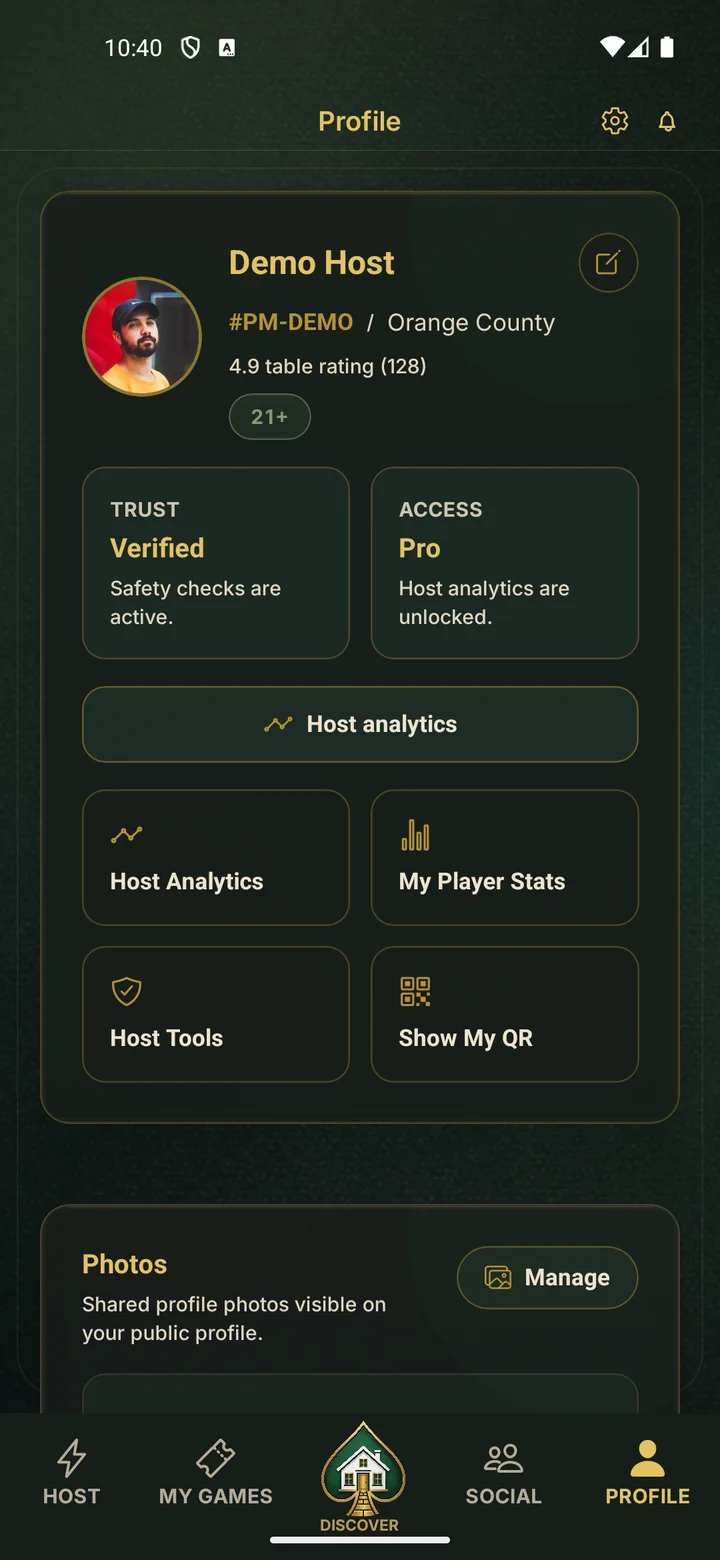
Hosting is the engine of a great poker community. The best hosts aren't the flashiest - they're consistent, clear, and safety-minded.
Set clear expectations
Players should know the basics before they ever request a seat:
- start time and expected end time
- seat count and format
- house rules (phones, smoking, rebuys, etc.)
- whether the game is invite-only or open to verified locals
Protect your location
Avoid sending addresses in group chats. PokerMeet is designed so addresses are shared only after approval and near start time.
Approve thoughtfully
A great table is a mix of friendly people who respect the game. If something feels off, decline the request.
Reduce no-shows
A short reminder before game day is usually enough. Consistency builds a reliable player pool.
Keep the vibe healthy
Respectful, inclusive behavior is the baseline. A great poker night is competitive but still welcoming.
Next step: If you're interested in hosting, apply as a host or follow county updates and select that you're interested in hosting.
Ready to join PokerMeet?
Want games near you?
Follow your county for local game alerts as trusted tables open.
PokerMeet shows the general area first, keeps host approval in the flow, and reveals exact addresses only after approval.
Related notes
Keep reading the rollout and trust notes.
Launch Updates • Apr 3, 2026
PokerMeet Is Looking for Host-Led Growth in Southern California
PokerMeet is opening with a host-led growth focus in Southern California and reviewed regions.
Launch Updates • Mar 27, 2026
Why Strong Hosts Matter More Than Ever for PokerMeet
Strong hosts create stability, consistency, and the kind of community people want to return to.
Host Guides • Mar 20, 2026
Why Great Home Poker Nights Start With the Host, Not the App
PokerMeet can support a game. A host creates the table people want to come back to.