
Host guidelines
Protect the home before the table opens.
Hosts shape the night before anyone arrives. These guidelines keep roster control, address privacy, and room expectations clear without turning a private home into a public listing.
Hosting standard
The room should feel curated before anyone gets directions.
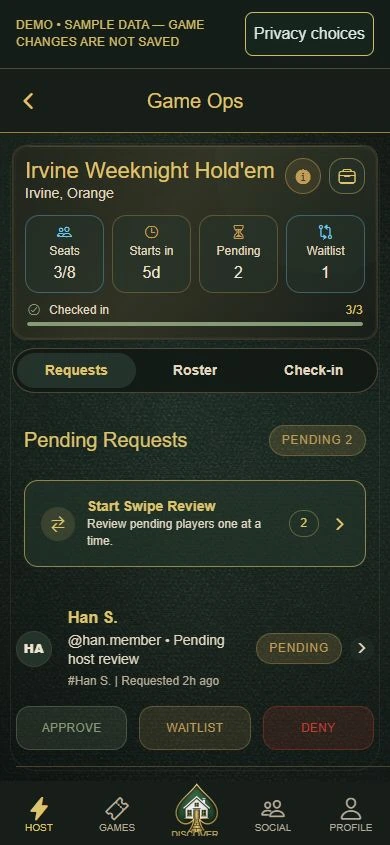
PokerMeet organizes requests, timing, and address visibility. Hosts still set the tone, review the people, and protect the home.
- No public address browsing.
- Every seat is approved by the host.
- 21+ participation remains the baseline.
- PokerMeet supports coordination, not public inventory.
Hosting flow
A private-home table needs clear decisions, not open access.
The baseline is simple: describe the night accurately, approve deliberately, keep the address gated, and escalate anything that threatens the room.

Night flow
Run the same standard from post to arrival.
Set expectations, approve deliberately, keep exact address access behind safety checks and reveal timing, and close the loop after the night.
Set the room
Describe capacity, timing, table format, and host expectations honestly before players request seats.
Approve intentionally
Every request is a host decision. If someone cannot be vetted or does not fit the room, decline the request.
Release the address
Exact address access requires approval, safety checks, and active reveal timing. Panic Hide removes visibility immediately.
Close the loop
Keep the roster accurate, document issues early, and use support when safety or privacy boundaries are crossed.
Related standards