
Editorial note
Home poker safety fundamentals
Practical steps to keep home games safe: approvals, hidden addresses, verification options, and panic hide.
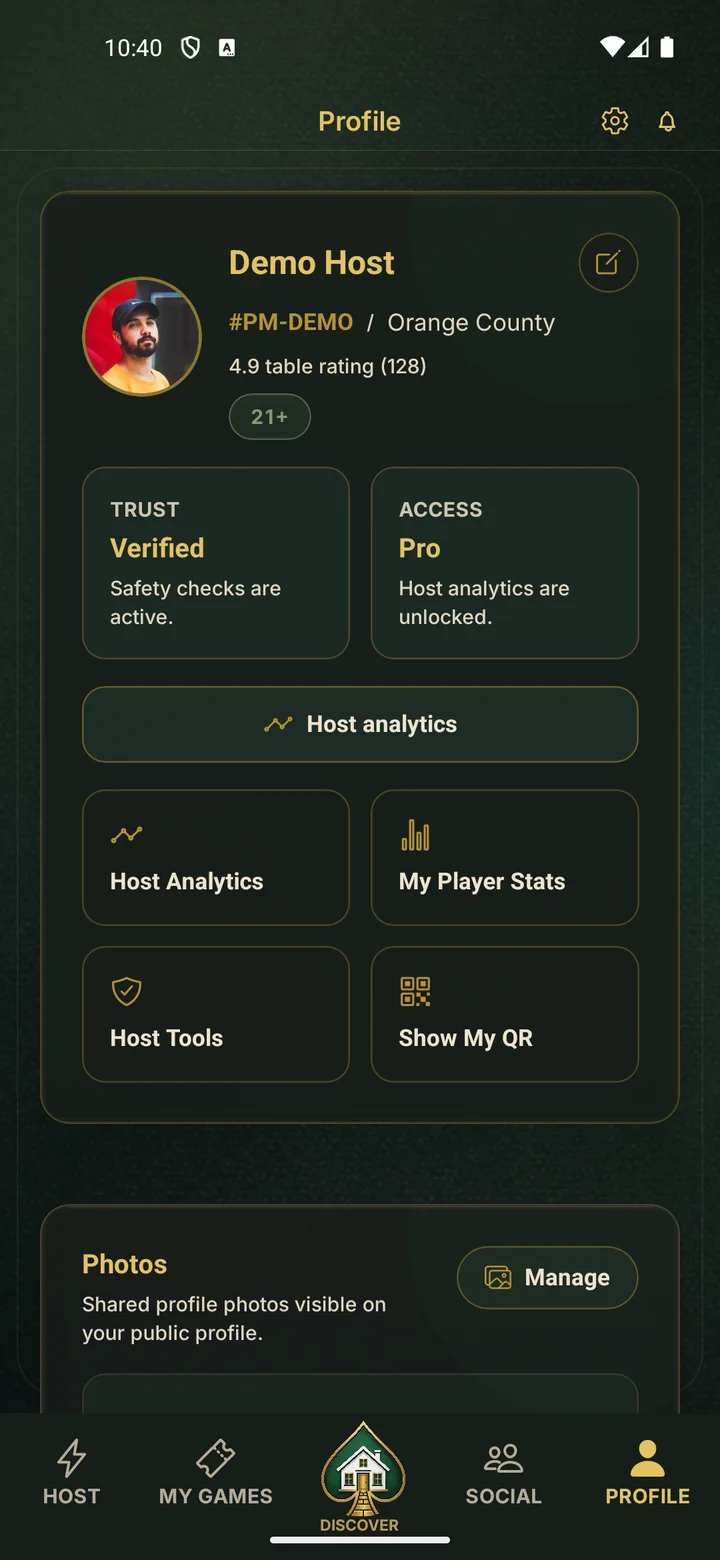
A great home game feels welcoming and controlled. These fundamentals help hosts and players keep the night safe without killing the vibe.
Before the game
- Approve every seat. Treat each request like an invitation check.
- Keep your address private until approval and near start time.
- Set expectations early: stakes, format, start time, and house rules.
During the game
- Use clear check-in steps so guests know what to do on arrival.
- If anything feels off, pause approvals or use panic hide to remove visibility.
- Keep the guest list tight and communicate changes quickly.
After the game
- Leave a quick rating to reinforce reliability and good etiquette.
- Follow up with respectful players to build a consistent roster.
- Report issues so the community standards stay strong.
Ready to join PokerMeet?
See how PokerMeet protects location details
Players see the general area first. Exact addresses go only to approved players before game time.
PokerMeet shows the general area first, keeps host approval in the flow, and reveals exact addresses only after approval.
Related notes
Keep reading the rollout and trust notes.
Feb 5, 2026
Why we built Panic Hide: a letter from the founders
Panic Hide gives hosts immediate control by removing non-host event visibility and address access when something feels off.
Feb 1, 2026
3 features we built to protect SoCal hosts
Approved address release, Panic Hide, and reliability signals are core PokerMeet features designed for real home-game host risk.
Jan 30, 2026
Beyond the casino: the thriving Southern California home game scene
Why more players across Orange County, Riverside, San Bernardino, and San Diego choose trusted local home games.